

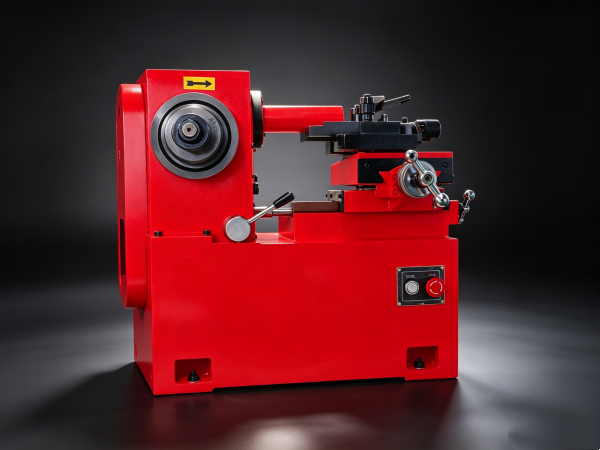
Q: The market offers a wide variety of equipment for repairing automotive brake discs and drums. For which specific maintenance applications is the C9335A brake drum (disc) lathe primarily designed?
A: The C9335A lathe is designed for repairing brake discs, brake drums, and wheel hubs on the vast majority of small vehicles. No complex tooling is required during maintenance; the equipment can be directly attached to brake components using standard wheel screws, ensuring a simple installation process and high precision in finished products. It serves as the primary equipment for automotive repair shops and small workshops handling wear and deformation repairs of braking components. Additionally, this model represents an upgraded version of the C9335 series, featuring comprehensively optimized overall performance.
Q: Compared to traditional vintage brake lathes, what are the key advantages of the upgraded C9335A?
A: The product features five key advantages:
1. Enhanced feed mechanism: Equipped with an oil-free, self-lubricating wear-resistant stainless steel ball screw for automatic tool feed, ensuring hassle-free daily maintenance and smooth, stable cutting performance;
2. Superior cutting capability: The tool boasts ample overall rigidity, enabling fast milling and machining speeds while significantly reducing repair time for individual brake components;
3. Robust power configuration: Standardly equipped with a 750W three-phase asynchronous motor (rated power 1.1 kW), delivering strong power output and consistent machining accuracy without deviation;
4. Stable and vibration-resistant frame: The heavy-duty integrated chassis weighs only 200 kg, preventing frame shaking even during prolonged high-speed machining and ensuring superior surface finish;
5. Flexible mobility: The equipment base includes dedicated mounting slots for casters, allowing easy addition or removal as needed for convenient transportation and workstation adjustment.
Additionally, the device features an optimized dual-blade structure, enabling more intuitive and straightforward feed adjustment operations, while significantly enhancing overall rigidity to prevent deformation during prolonged use.
Q: Many maintenance technicians are concerned about the equipment's machining capabilities. What are the key machining parameters of the C9335A?
A: The core specification parameters are as follows:
1. Processing diameter: The general processing range for brake drums and brake discs is 180–350 mm, covering mainstream brake components for household vehicles on the market;
2. Dual workpiece rotation speeds: 75 r/min and 130 r/min, allowing switching between high and low speeds based on wear conditions;
3. Maximum tool travel: 100 mm, suitable for machining brake discs of varying thicknesses;
4. Standard cutting feed rate: 0.16 mm/r, ensuring uniform cutting progression;
5. Motor power: 1.1 kW; both net weight and gross weight of the unit are 200 kg.
Q: Are all necessary accessories included, and is there any learning curve for beginners?
A: The equipment comes with a complete tool kit upon delivery, containing all necessary components including specialized fixing tools, main shaft connectors, transmission belts, positioning sleeves, etc., enabling immediate assembly upon opening. Its dual-blade adjustment mechanism is simplified in design, featuring precise and reliable dial controls; maintenance technicians can independently perform smooth surface repairs on brake discs and brake drums after mastering the operation procedure, requiring no expertise in specialized machine tools and offering very low learning barriers.
Q: Which auto repair shops are suitable for purchasing this device, and what is its long-term costeffectiveness?
A: Small comprehensive auto repair shops, tire maintenance centers, and used vehicle repair workshops are recommended as priority procurement targets. Traditional replacement of new brake discs or brake drums is costly; however, using a C9335A lathe to perform smooth surface repairs on worn or slightly deformed brake components can significantly reduce maintenance costs for vehicle owners, while also enabling stores to introduce brake disc repair as a profitable service offering. The equipment features a robust, vibration-resistant body, self-lubricating lead screws that require minimal maintenance, and a durable motor with low failure rates. Once purchased, it ensures long-term stable operation, resulting in extremely low long-term operational maintenance costs and rapid return on investment.
Q: What specific design features have been implemented to ensure operational stability of the device?
A: First, it employs a heavy-duty cast iron frame with a self-weight of 200 kg that counteracts vibrations generated by high-speed cutting, preventing wave patterns on the workpiece surface; second, independent tool-scale adjustments for both cutting tools ensure balanced force distribution and eliminate one-sided wear during machining; third, the stainless steel ball screw exhibits minimal wear-induced deformation, ensuring no feed deviation even under prolonged automatic operation; the dual-speed motors are compatible with both roughing and finishing operations rough milling removes wear grooves while finishing ensures surface leveling through layered processing, resulting in finished products meeting original factory standards for flatness and coaxiality.
Q: Does the portability of the device compromise processing stability?
A: No. The swivel casters serve solely as a transportation tool; during formal processing, the equipment can be secured on the ground, with the heavy frame fully eliminating potential shaking risks associated with the mobile structure. They are conveniently installed for station relocation in retail settings or mobile maintenance operations, providing stable support during stationary processing. The mobility function and machining precision are mutually compatible, achieving a balance between flexibility and stability.
Q: Compared to the previous C9335 model, what are the most notable improvements of the upgraded C9335A?
A: The most intuitive improvement is the dual-blade adjustment mechanism. The old model's blade adjustment was cumbersome, and feed rate control posed significant challenges; the new model features independent scale knobs for both fine and coarse adjustments, enabling even beginners to precisely control cutting parameters. Additionally, the entire unit has been reinforced with a thicker construction, the screw rod material has been upgraded to wear-resistant stainless steel, and motor power redundancy has been enhanced, significantly improving durability under prolonged high-frequency operation and addressing the two major drawbacks of the previous model—long-term machining vibrations and complex adjustment processes.
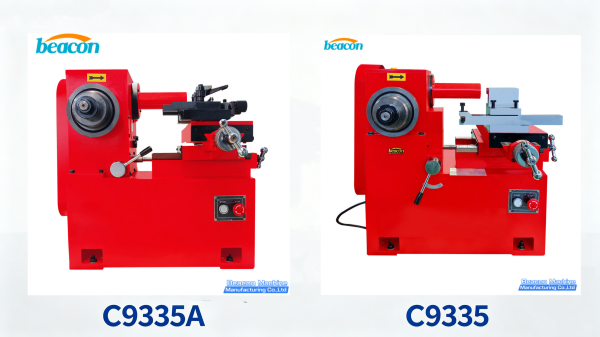
With the continuous rise in household vehicle ownership, demand for brake system repairs has grown annually. The C9335A brake drum (disc) lathe, featuring a wide machining range, strong cutting capability, low maintenance costs, and ease of operation, fills the market gap for cost-effective yet high-precision brake repair equipment in small and medium-sized auto repair shops, becoming a popular new product in the industry.
 English
 Русский
 Español